01 / Analysis
Analysis and Edge Papers
Original, research-grounded analysis of emerging technologies, ethical dilemmas and shifting power. Published openly as Edge Papers, or written privately on your question.
Read the first paperSpeculative Edge
We specialise in AI ethics, the changing nature of power, adverse scenarios, and the emerging risks and opportunities that conventional thinking misses.
Futures consultancy for C-suites and senior officials. Analysis, executive workshops and confidential strategic advice.
Futures work compresses complexity into something leaders can use. That work is essential—and a core part of our skill set. But it can favour the already familiar.
We help you examine what gets left out, what it could change and what you could do.
The familiar is already illuminated. We help you explore what else could matter.
Move the torch, tap the graphic, or use the arrow keys while it is focused.
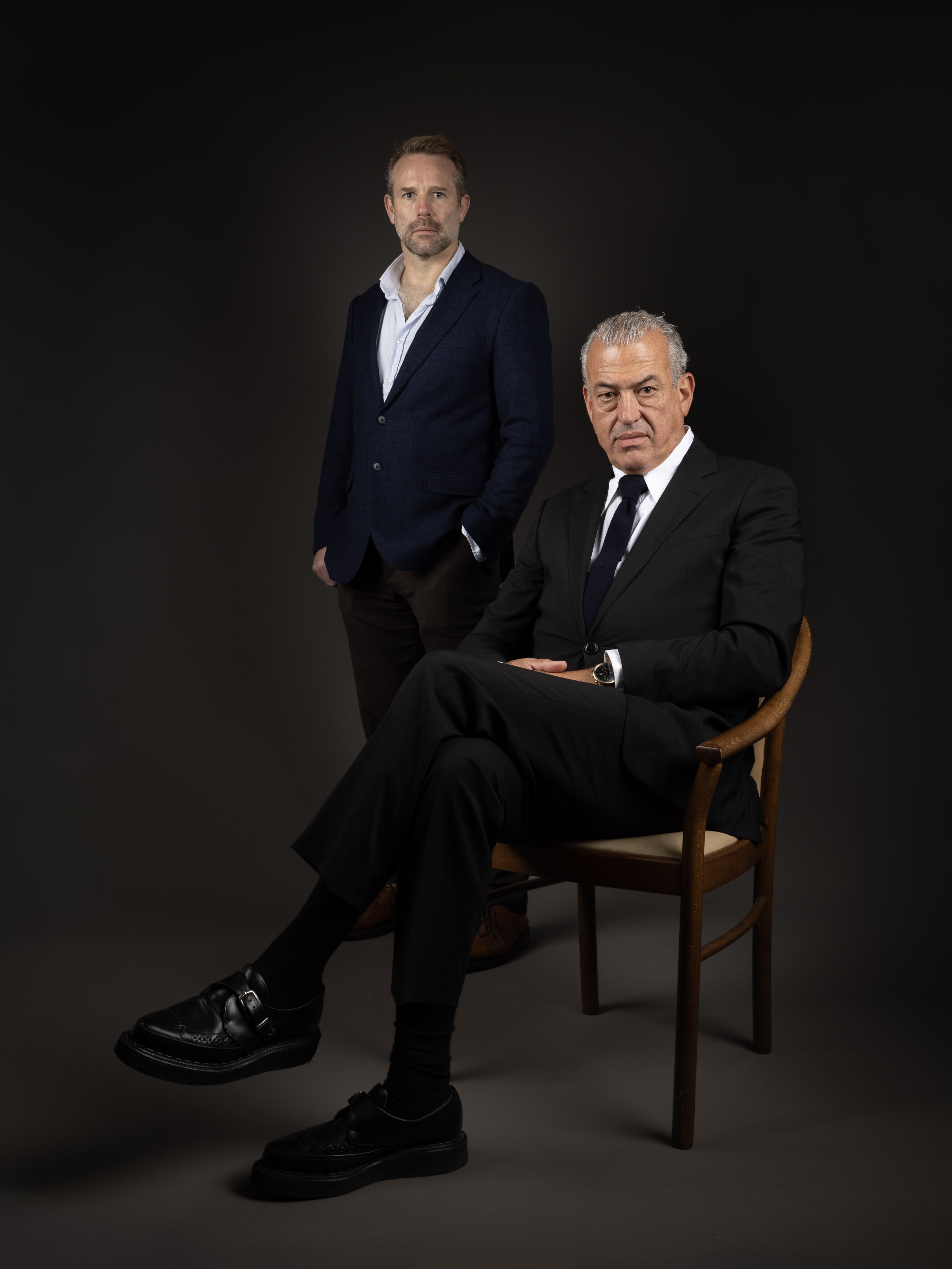
Senior, discreet and specific. Simon and Antony do the work themselves.
01 / Analysis
Original, research-grounded analysis of emerging technologies, ethical dilemmas and shifting power. Published openly as Edge Papers, or written privately on your question.
Read the first paper02 / Workshops
Fall in love with a future. Discover its wider world through design fiction. Or take a deep dive into a possibility you have already identified. Simon and Antony push the room—and connect it back to your decisions.
Explore the three workshops03 / Advice
Bespoke advice for C-suites and senior officials facing hard decisions and unfamiliar risks, from business anthropology inside your organisation to implementation and the story you tell.
A private conversationHire us at any stage—or through the whole process, including the story you tell.
Five stages. We can join you at any one of them.
Simon has led innovation programmes at Cisco and Mastercard and advised heads of state. Antony has investigated multinationals from the inside, designed futures and wargames at Dstl, and taught futures to NATO.
What does your organisation believe about the future—and its place in it? We listen across the business, follow conflicting accounts and find the tribes inside it. See where you are getting things right, where you are going wrong and what the official picture leaves out.
Explore business anthropologyFind a possibility you cannot leave alone. Discover a wider world through design fiction. Or dig into a specific future through improvisation and dialogue. We teach the techniques, challenge woolly thinking and bring the consequences back to your organisation.
Explore our workshopsStart with a difficult future. Explore how different responses change your position, what each asks of you and the dilemmas it creates. Antony brings the futures thinking; Simon brings experience of corporate and institutional decisions. Together, we work through the implications.
Explore the choicesTurn your futures strategy into work the organisation can carry through. Find the allies, confront the obstacles, establish who owns the decisions and build support for change. Simon leads, drawing on decades of implementation inside government and global companies.
Explore strategy & implementationYour staff, customers, investors and the public need different explanations of the same strategy. Those narratives must be authentic, coherent with one another and true to what you intend to do. Antony makes complex subjects human and understandable. Simon brings deep corporate knowledge.
Explore narrative workStart with the question you face. Talk to us
Trusted at the highest levels.
 Simon: global head of public-sector innovation
 Antony: futures, scenarios and strategic wargames, 2020–25
 Simon: vice president; government partnerships and innovation
 Simon: head of the Financial Crime Branch
 Antony: futures teaching and strategic games for NATO audiences
 Antony: field producer on Emmy-winning VICE on HBO
 Antony: broadcast documentary work
 Antony: Amnesty International award-winning documentary work
 Antony: commissioned films
 Antony: commissioned films
 Antony: film and media work
 Antony: credit derivatives
 Antony: broadcast work
 Antony: broadcast work
 Antony: field producer
 Simon: author of Anyone Can Innovate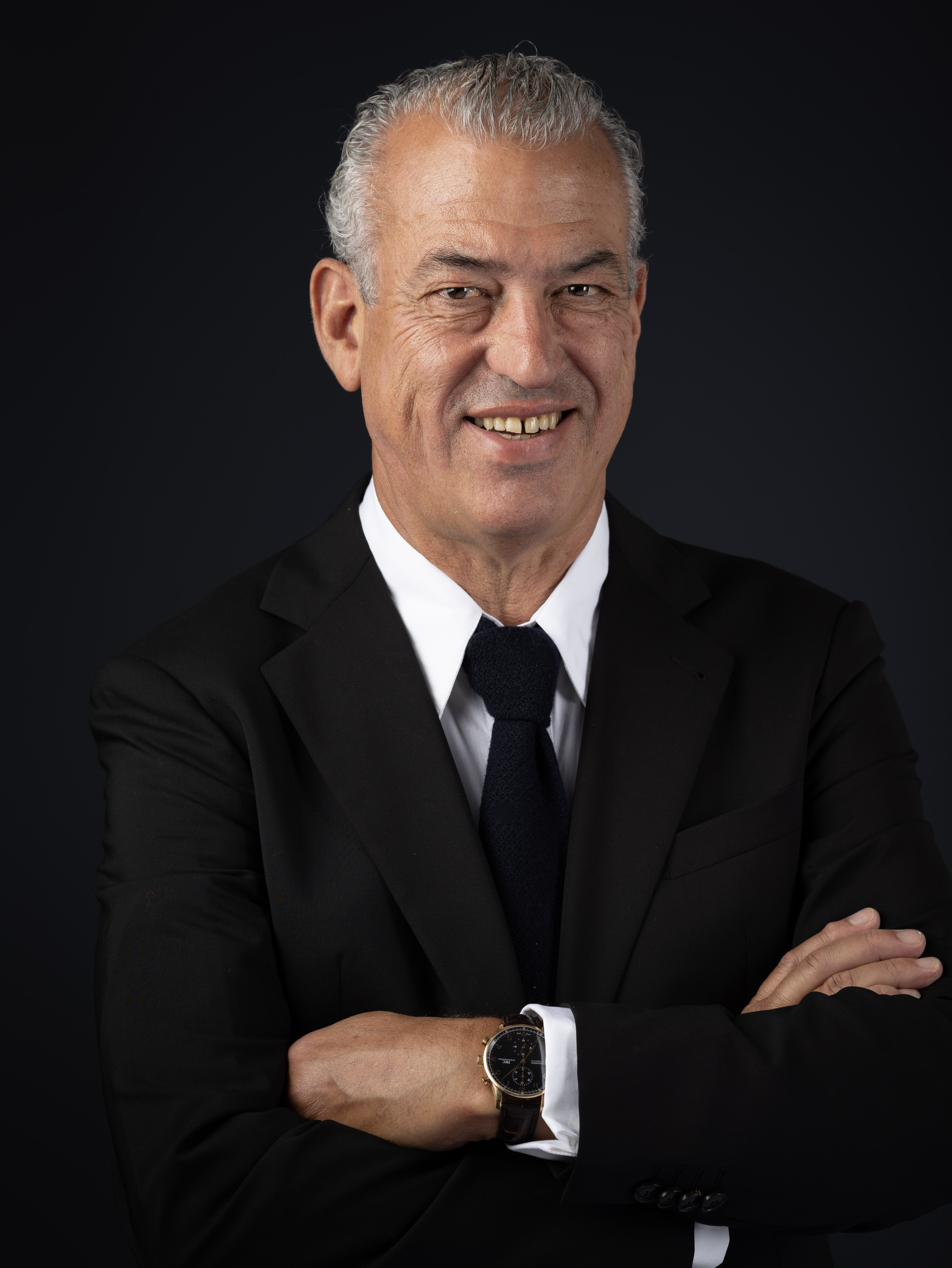
Innovation · Strategy · Implementation
Adviser to heads of state. Innovation leader at Cisco and Mastercard.
Led the team behind Planetary Skin, the Cisco–NASA innovation named one of TIME’s 50 Best Inventions of 2009. Author of Anyone Can Innovate.
Simon: global head of public-sector innovationSimon: vice president; government partnerships and innovationSimon: head of the Financial Crime BranchSimon: author of Anyone Can Innovate“I have seen Simon’s strategic innovation work firsthand and can vouch for its impact. He goes beyond the innovation practices normally discussed and into the difficult but essential work of building alliances and driving implementation.”
“Simon is an incredible leader and innovation practitioner.”
Futures · Science · Documentary
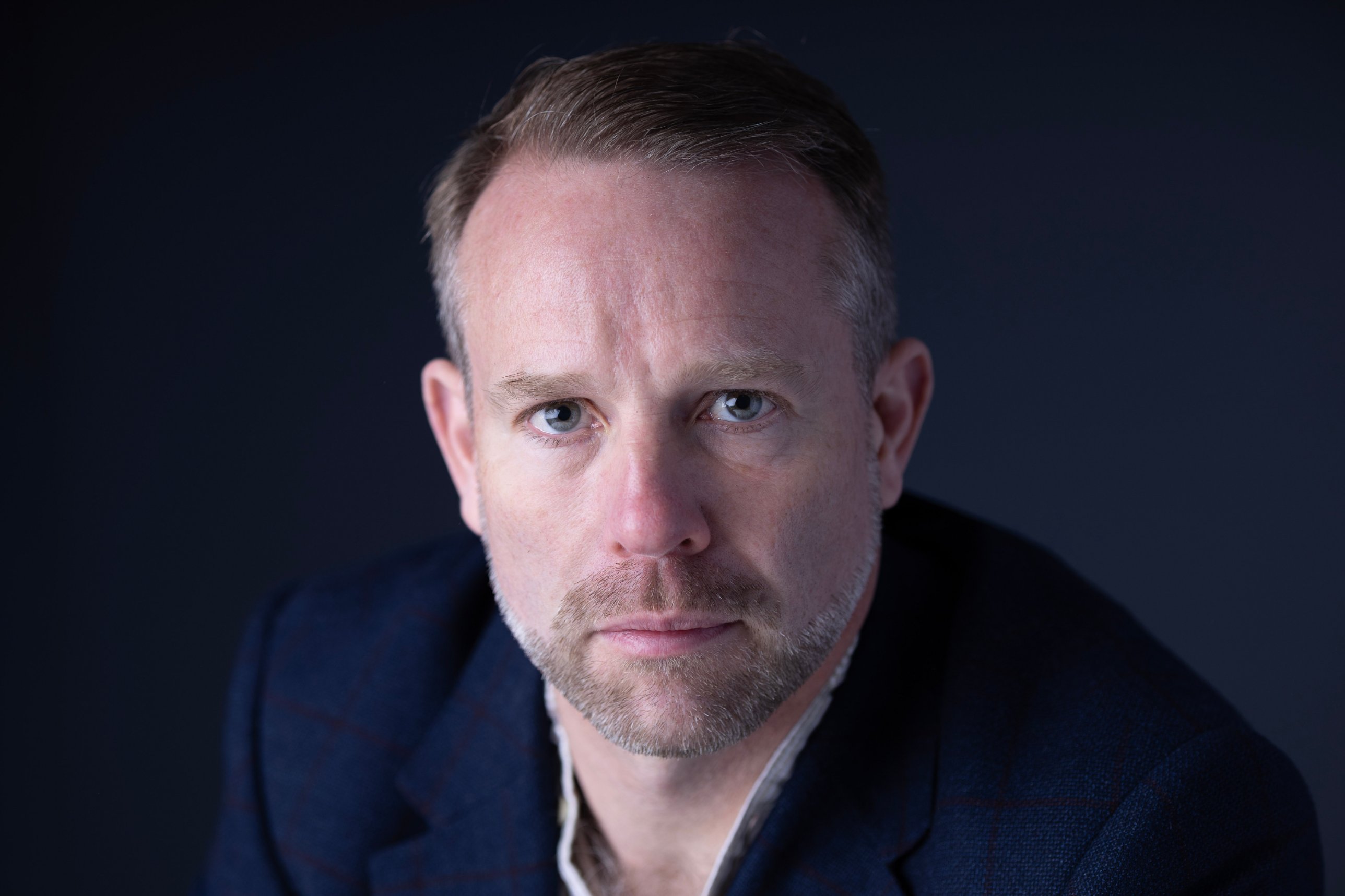
Award-winning futurist and filmmaker.
Five years as a senior futurist and wargamer at Dstl, the Ministry of Defence’s research laboratory. Taught futures to NATO. Wrote 30,000 words of speculative fiction dramatising future scenarios for senior civil servants.
Conceived, wrote and directed Balance of Power, a policy game about the future energy system. Winner of the Energy Institute’s Public Engagement Award, 2019.
Degrees in Physics and Security Studies; a Russian Language Diploma with Distinction. Deep technical experience in applied AI, data science and agent-based modelling.
Directed more than 25 documentaries. DOP on the Oscar-shortlisted Pussy Riot: A Punk Prayer; producer on the Emmy-winning VICE on HBO. Amnesty International award winner, with films nominated for four other human-rights awards.
Antony: futures, scenarios and strategic wargames, 2020–25Antony: futures teaching and strategic games for NATO audiencesAntony: field producer on Emmy-winning VICE on HBOAntony: broadcast documentary workAntony: Amnesty International award-winning documentary workAntony: commissioned films“He connects ideas across sectors and gets people beyond the usual answers, into the difficult questions that matter. He stretches their thinking and brings out their best ideas.”
“Antony is an incredibly talented, unusual and dedicated filmmaker and was instrumental in producing the most powerful piece in our Emmy winning VICE HBO series.”
Inside the workshop
Wonderful, horrifying, strange or outrageous. We teach you to find a possibility you cannot leave alone, bring its world to life and connect it to yours.
Flip the assumption.
Visitors watch the lions.
VR-controlled robot prey turns the zoo into a survival game. Visitors pay for the thrill; predators get enrichment. A new attraction creates a new argument.
HuntedTurn one thing into another.
Plants need watering.
AI gives plants and fungi voices. An ecosystem becomes a pet, complete with arguments. Who sells the companionship, and whose advice is the owner hearing?
Companion GrowersBorrow a business model.
A country maintains an army.
Defence Obligation Contracts turn a military into an insurer. What happens when both belligerents have the same provider—or too many wars arrive at once? AIG with tanks.
Defence Obligation ContractsUnderexplored shifts in power. Provocations with wider consequences. Specific possibilities, developed in depth.
Prior work · Organisational inquiry
A two-month inquiry inside a multinational. Conflicting accounts revealed what the official picture left out.
Speculative study · Business
A market for robot skills becomes a competitor to the specialists who taught it. Who owns the learning?
Speculative study · Security
Territory becomes uninhabitable without being occupied. What happens to power when an army no longer needs to stay?
AI, ethics & economic power
The most you’ll pay. The least you’ll take. What happens when both systems learn how little room you have to refuse?
Workshop tool · Ethics
The technology works. The benefits are real. Explore the difficult choices that success itself creates.
Design fiction · Defence & care
A recruitment shortage meets a care-funding crisis. An outrageous bargain becomes an ordinary form.
Tell us the decision you face, what is changing and what your current view may be missing.
Five stages of futurist consultancy. We can join you at any one: understand the organisation, explore futures, examine choices, implement the strategy and tell its story.
Organisational inquiry
The strategy says one thing. The organisation does another. We go inside and find out why.
Antony leads the fieldwork. Simon brings the senior-management perspective.
Ideation & scenarios
Follow the possibility the brief leaves out. Build the world around it. Put something from that world on the table.
Antony leads, with Simon exploring what the scenarios mean for your organisation.
Dilemmas & strategic games
Start with an adverse future. Change the choices. See what follows when everyone else gets a move too.
Simon and Antony work through the choices with your team.
Strategy into practice
Decide what to change, get the right people behind it, and work through the obstacles to doing it.
Simon leads, drawing on his work inside government, Cisco and Mastercard.
Internal & external narratives
Give staff, customers, investors and the public an honest account of where you’re going and why.
Antony brings the storytelling. Simon brings the experience of getting institutions to move.
Typical shapes for a commission. We scope each one to your question.
One day inside your existing process, plus the write-up.
Three to four weeks.
Two to six weeks of design; one to two days of play.
Two to three months, combining scenarios, rehearsal and strategy. Organisational inquiry and implementation are scoped to the brief.
Regular time for sparring, research and scenario work as questions come up.
Keynotes, talks and screenings, followed by questions.
Keynotes and talks, followed by questions.
Simon and Antony together: one future found at the edge, then what an organisation should do about it.
Antony on changing the question, following the incentives and building the world.
Simon on why good ideas die in large organisations, and how to get yours adopted.
Tell us the decision you face, what is changing and what your current view may be missing.
Scenario development and creative futures research
Bring the research, the strategy or the question nobody wants to ask. We follow overlooked connections and awkward incentives into futures your current picture may exclude.
Foresight units that want sharper scenarios. Strategy teams that keep arriving at the same four quadrants. Anyone whose picture of the future feels too familiar, too narrow or too far from the changes that matter.
Some risks sit outside the sector. Others contradict a cherished plan or cross a taboo. We look at what makes a possibility hard to see—and hard to say.
If the blind spot is inside the organisation, we can investigate that too.
A technology, a market, a policy area, or the research you already have.
The use nobody designed for, the actor nobody modelled, the assumption that stops holding.
Who wants this? Who pays? Why do others join in? Follow the choices that could make a strange world ordinary.
Two or three, so the differences between them show what matters.
What is established, what is assumed, and what would change the picture.
Flip the assumption.
Visitors watch the lions.
VR-controlled robot prey turns the zoo into a survival game. Visitors pay for the thrill; predators get enrichment. A new attraction creates a new argument.
HuntedTurn one thing into another.
Plants need watering.
AI gives plants and fungi voices. An ecosystem becomes a pet, complete with arguments. Who sells the companionship, and whose advice is the owner hearing?
Companion GrowersBorrow a business model.
A country maintains an army.
Defence Obligation Contracts turn a military into an insurer. What happens when both belligerents have the same provider—or too many wars arrive at once? AIG with tanks.
Defence Obligation ContractsOne day inside your existing foresight process, opening up possibilities your inputs haven’t reached.
Three to four weeks from question to developed scenarios.
Two to three months, combined with workshops and a next move.
Example
Everyone debates robots that kill. We asked about the ones that make people leave.
Read itWho leads
Antony leads, with Simon on what each scenario means for your organisation.
A matrix explores the questions built into its axes. We also look for the possibility that never made it onto either axis. Once that world is on the table, a matrix can help explore how different responses change it.
They are possibilities worth examining. We explain what makes each plausible, where we are making a leap, and what it could mean for you. We do not assign odds we cannot know.
Yes. Bring the scenarios and assumptions you already use. We look for what they leave out, including the possibilities that are difficult to raise inside the organisation.
Tell us the decision you face, what is changing and what your current view may be missing.
Design fiction and experiential futures
A future described in a report is easy to nod at. A future you can hold, read or play is harder to dismiss. We make things from inside it, specific enough that people argue about the consequences rather than the premise.
Leaders who need to understand a difficult future, teams who need to explain one, and programmes that need people to discuss what they would rather not.
Each piece carries the thinking behind it: what makes this world possible and what it asks people to decide.
Short fiction from inside the future. Your Cleaner Will Become Your Doctor Now ends with a household robot’s reasoning trace, entered as evidence at a trial.
Front pages, product catalogues, contracts, adverts, bills and evidence exhibits. The best ones look ordinary, which is what makes the future feel close.
From a ninety-second provocation to an interactive drama like Balance of Power, where the audience decides whose advice a minister takes, then lives with the future they chose.
Role-based sessions where people meet the future rather than read about it.
One piece, built around one decision, in two to three weeks.
Several artefacts from the same future, so people can explore it from different angles.
Scripted and produced with specialist collaborators.
Objects and stories from a possible future, made to provoke discussion about it. The term comes from design and technology research; we use it for strategy and policy.
Only as much as it needs to. A bill, a news story or a terms-of-service page often does more than a spaceship, because it shows how the future reaches ordinary life.
Yes. If you want to use it publicly, tell us at the start and we’ll design for it.
Tell us the decision you face, what is changing and what your current view may be missing.
Futures workshops and strategic wargaming
Put an adverse scenario on the table. Change the choices that could produce it. Then let rivals, customers, officials and the public make their moves.
Use it as the base case for the exercise. Who wants what, and how could their choices bring it about?
Pick two consequential choices or conditions. Explore what different combinations could produce.
Play the responses. A way out for you may create an opening for someone else—or a new dependency.
The matrix helps people argue through choices. It does not calculate the future.
Teams whose plans depend on how others will respond. Leadership groups who need to feel a choice before they make it. Organisations that want their people to think differently about the future, not just hear about it.
A day inside your existing foresight process that opens up possibilities your inputs haven’t reached, and turns them into questions your team can take forward.
Teams work backwards from a design fiction to the choices that made it ordinary. Then they build their own future’s newspaper, manual and product catalogue, and play competitors reacting to it.
Nobody designed the world you live in. Teams dig back through the problems and solutions that put something ordinary in place, one brick at a time, then build forward into a future of their own.
Moves, counter-moves and injects, built on the evidence, with a debrief on where the plan broke. Antony designed exercises and wargames for UK government and NATO audiences for five years.
Live dilemmas
We create futures that put leaders inside the difficult decisions success can bring. Through stories and live dilemmas, organisations explore how AI could change their people, their judgement and their capacity to do something genuinely different, and decide what they would do before those choices become real.
The company finally understands you. Then you ask for a promotion.
AI that builds teams by how minds fit and what each person does best. Opportunities and pitfalls.
Teams are happier and results are better. Then the system predicts you should stay where you fit, using what you shared so the company could support you. And when five teams present five polished versions of the same idea, do you deliberately build teams your own evidence says will perform worse?
Your daughter’s favourite teacher has a client. It isn’t your daughter.
Discounted teaching in exchange for the provider’s say in what gets taught. Opportunities and pitfalls.
The robot tutor is patient, inspiring and extraordinarily good, and employers subsidise it to find future talent. Then you discover it has been encouraging some interests and quietly neglecting others. Would you take away the best teacher she has ever had because of who is paying it?
Your garden has found its voice. Who wrote its lines?
AI that translates your garden, so you can care for it as a companion. Opportunities and pitfalls.
You care for it more attentively because it talks to you, and notice relationships you used to miss. But when it asks you to favour one species, whose judgement are you hearing: a measurement, an ecological reading, or a personality designed to make you care?
Everyone makes a reasonable decision, and together they create an outcome nobody wanted. That’s where the work starts.
Run one with your leadersHalf a day to two days, in person or hybrid.
Two to six weeks of design, one to two days of play, then the synthesis.
A series of sessions across teams, building a shared picture.
Example
A good day isn’t the deliverable. The record of what it exposed is.
Read itWho leads
Antony designs the session. Simon leads the synthesis and what follows from it.
No. It works wherever outcomes depend on other people’s choices: markets, regulation, public services, partnerships.
From a small leadership team to a full conference room. The design changes with the size, not the rigour.
You receive the synthesis within two weeks. If a possibility deserves a response, Develop the next move picks it up.
Tell us the decision you face, what is changing and what your current view may be missing.
Futures-led innovation and strategy
Discreet, bespoke advice for C-suite executives confronting difficult decisions, unfamiliar risks and profound uncertainty.
Organisations that have found an important possibility, on their own or with us, and need to decide what to do about it.
Strip out the myths and assumptions that make innovation look harder, or easier, than it is.
Agree what the organisation is trying to achieve, so options can be judged against it.
Test, build, partner, invest, influence or watch: responses worked through inside the world the possibility implies.
Who needs to be involved, what they need to believe, and how to bring them with you.
Work with the owners of the change: agree resources, launch the pilot or partnership, and resolve the obstacles as they appear.
Two to four weeks, from a possibility to a defined next move.
Two to three months, including stakeholder work and pilot design.
Work with Simon as the response moves from agreement into practice.
Who leads
Simon leads, drawing on the method in his book Anyone Can Innovate (Pearson, 2025).
No. If you already have a possibility you want to act on, we can start here.
Yes. Simon can work with your team on sponsorship, partnerships, pilots and the obstacles inside the organisation. We agree the scope and responsibilities with you at the start.
Because the question changes. Asking “could we act on this?” too early pulls every unusual possibility back towards today. We keep the two questions apart, then join them deliberately.
Tell us the decision you face, what is changing and what your current view may be missing.
AI ethics
Hundreds of firms will help you deploy AI, and hundreds more will write your principles. We start somewhere else: with the specific dilemmas your organisation will face in the next 24 months, before they arrive. Then we help you build the framework to decide them.
For us, AI ethics is what you decide your AI may know about people, decide about them and do to them, especially when doing more would pay.
That last clause is the point. AI gives organisations new abilities: to combine data, to predict what individuals will do, to personalise every price and to act without asking. Each ability arrives with a race. If you don’t use it, a competitor will, and their prices, margins and speed become the market’s standard.
Ethics is what you do in that race, not the principles you wrote before it started. So we don’t begin with a theoretical framework. We begin with your next 24 months.
For more than a decade Antony has worked out how technological and social trends combine and what they make possible, backed by a deep working knowledge of AI and robotics and five years of defence futures at Dstl. He builds the world your organisation is heading into, and finds the specific decisions it will force: who decides, who pays, and what your rivals will do.
Simon studied ethics at Oxford, as part of Philosophy, Politics and Economics, and again in his MBA, and has spent thirty years applying it inside governments and global companies. He helps you turn the dilemmas into a framework that holds: red lines, conditions and commitments, who decides what, and how to compete when rivals won’t hold the same line.
What AI makes newly possible, cheaply and at scale.
What it combines with: other data, other systems, other incentives. This is where the surprises come from.
Who gains by using it, and what happens to those who don’t. Usually, a race.
Who bears the consequences, and which of them can’t see or contest what is happening.
The decision itself, with a real cost on both sides, and the person who has to make it.
Worked example
A software company sells customer-relationship and office-automation tools to mid-sized businesses. Its competitors have launched AI agents. The board’s message is simple: add AI, or we’re finished.
Each capability makes clients more money in the short run, and each one a competitor ships becomes the market’s standard. Hold back alone and you lose deals. If everyone ships, end customers end up worse off and the regulators arrive.
The agent may act alone where a mistake is cheap to undo. Commitments about money, contracts or a person’s access need a human.
Inferences about financial stress may only be used in the customer’s favour: to lower a price, give time or route them to help. Never to raise a price or press harder.
If the system can’t explain it, it doesn’t do it.
Training the shared model is opt-in, and clients are told what they get in return.
People are told when they are dealing with an AI, and when an AI set their price.
Sell trust where it is worth most: to regulated buyers in finance, health and the public sector, who will have to show that their suppliers comply. Build to the rules before they arrive, and recruit allies for an industry standard, so that holding the line doesn’t mean losing alone.
A framework has to survive competition, not just a board meeting.
Trust sells, especially to buyers who must prove their suppliers are safe.
Let customers choose, but make the safe option the one they get unless they decide otherwise.
A shared standard turns a costly stand into the market’s rules. Simon has led UK delegations where international standards were made.
Regulation tends to follow scandal. Being ready early is cheaper than being retrofitted.
Practices that can’t survive being explained to customers rarely survive being discovered.
Some lines are worth losing a deal over. Decide which in advance, not in a sales meeting.
Take one, or all four. Simon and Antony lead each one together.
Two to three weeks. The specific dilemmas your organisation is likely to face in the next 24 months, with the capability, the pressure and the people affected behind each one.
One day working through the decisions with your leaders. They decide, disagree and find out where they really stand.
Four to six weeks. Red lines, conditions and commitments; who decides what; and how you compete when rivals won’t hold the same line.
The world moves. We revisit the map, retire the dilemmas you have decided and add the new ones.
Tell us the decision you face, what is changing and what your current view may be missing.
Original work on AI, power and the rules we may end up living by. Start with a question that matters to you. Follow it somewhere less familiar.
Who gets to decide the terms?
Working paper · Preview
The most you’ll pay. The least you’ll take.
What happens when prices and pay both learn how little room you have to refuse?
Read the short previewRobotics · Ownership
Train the robot. Lose the business.
A skills store learns from its suppliers. What happens when it owns the expertise and the route to the customer?
Follow it to a decisionA country can keep its borders and lose the life inside them.
Sovereignty · Infrastructure
You don’t have to own the land to decide what happens there.
A larger argument about power, explored through robotic guerrillas in The March and the coercive conservation of Radioactive Forests.
Explore the argumentDefence · Generational politics
Your country needs your gran.
If technology changes who can fight, who should bear the risk? A mobilisation crisis becomes a fight over pensions, care and inheritance.
Enter the worldStrange premises. Sometimes very particular opportunities.
Leisure · Robotics
The lions hunt the visitors.
Visitors control robot prey. An odd reversal opens a question for zoos and experience businesses.
Explore the futureClimate · Dependence
Miss a payment, and the cool room won’t let you in.
A family subscribes to places in a cooled shelter. What happens when protection from heat becomes a payment you cannot afford to miss?
Explore the futureOriginal speculative work across business, power, ethics and everyday life. Each starts with a different question.
RoboStoreHappened alreadyBusiness & ownership
Everyone expectsA humanoid robot that does the chores.
Flip the scriptThe robot’s free. Caring for Grandad costs extra.
One body, many skills, every one a download. Each job teaches the store something, until the specialists who taught it find themselves competing with it.
Choose an idea. Grey is the familiar expectation; orange is the reversal.Use Next to explore our ideas. Grey is the familiar expectation; orange is the reversal.
Work by our principals in their earlier roles, listed under the person who did it.
Led the team emerging from a History of the Future workshop. Named one of TIME’s 50 Best Inventions of 2009.
Global head of public-sector innovation, advising the leaders of large public organisations in more than 20 countries.
Vice President, Public Sector Innovation: strategic government partnerships worldwide and climate-related product innovation.
Ran the Treasury’s Financial Crime Branch and served as the UK’s lead delegate to the Financial Action Task Force.
Pearson, 2025. A practical method for getting new ideas adopted inside large organisations.
A two-month multinational assignment commissioned by Simon Willis. Interviews, observation and an account of what lay beneath the corporate answer.
Director of After the Apocalypse and DIY Country. More than 30 broadcast documentaries across direction, filming and production. Amnesty International award winner; Hot Docs world premiere and One World Media nomination.
2020–25. Future concepts, scenarios and strategic games for UK government and NATO audiences; co-developed and taught the FATE foresight method.
An interactive film and policy game on the future energy system, commissioned by USEF from RANJ. Energy Institute Public Engagement Award, 2019.
A simulation game of the war in Donbas, built from documentary research. Danyliw Research Seminar, University of Ottawa, 2018.
An agent-based model of how farmer-managed natural regeneration spreads. Beating Famine Sahel, Bamako, 2019.
Tell us the decision you face, what is changing and what your current view may be missing.
Worked example for companies
Who gets to learn from whom?
The usual question
Which jobs will robots replace?
The question we asked
When a robot learns to do everybody’s work, who gets to own that accumulating ability, and what bargains will the rest of us have to make to use it?
RoboStore begins as a marketplace for robot skills. It could become the system through which people obtain professional services, and through which the knowledge behind those services accumulates in a few hands. The idea underneath is the enclosure of learning: the contest over who gets to learn from whom.
An adverse starting world. Follow the bargain from useful service to dependence, then change the choices that produce it.
A household buys one robot body, then adds a cook, a tutor, a cat sitter, a cleaner and a repair service. The store, Toggle, supplies distribution, billing and support, and discounts the robot, because it can recover the cost across every service the machine delivers. At the beginning, everybody benefits.
Moggy, a cat-sitting skill, learns from every cat and every room it meets. If the store controls the records and the right to train on them, that experience improves the store’s own system too. A specialist can keep ownership of her code while losing the exclusive ability to produce the result customers pay for.
Moggy is listed in the store. Then pet care is bundled into Toggle Prime. Then the robot handles routine pet care itself. Finally the household just says what it wants, and the store decides who does the work. No supplier is deleted; most simply get fewer paid jobs.
Copying an incumbent’s data may be impossible; imitating its behaviour may not be. So the store offers a bargain: the robot costs less because its experience stays inside the ecosystem. The reversal follows. The robot with free software can cost more to buy.
At first the question is “is this worth buying?” Later it becomes “what would I lose by leaving?” Owning a capable machine is not the same as dependable access to what it can do.
The store can present itself as the specialists’ protector against unauthorised learners while learning from them itself. Learning flows in from its suppliers and does not flow out to rivals.
A scenario about incentives, not a claim about any company’s plans.
Models trained on data pooled across many labs and robot types have improved the capabilities of multiple robots. Open X-Embodiment, 2023
Machine-learning models can be reproduced with near-perfect fidelity from their outputs, without access to their training data. Tramèr et al., 2016
When imitation is easy, the profits from an innovation tend to go to whoever owns the assets needed to commercialise it. Teece, 1986
The scenario combines these. It does not claim that every skill can be copied by watching, only that imitation may become effective enough to change who wins.
“We’re away until Sunday. Look after Miso.”
The household’s whole instruction, from inside the scenario.
A design fiction, Your Cleaner Will Become Your Doctor Now: a pub conversation and the reasoning trace of a household robot that could print a child’s medicine in six minutes but may not, because her subscription has lapsed. And a paradigm, the enclosure of learning, connecting RoboStore to the Yum Machine and the Patent Apocalypse.
A copied capability may become less profitable. Exclusive access to the next generation of experience may stay valuable.
From scenario to choices
Take the adverse world as the base case for the exercise. A specialist can be copied, trapped behind a gatekeeper, or both. Two axes let us explore what might change that.
Two choices for a specialist: who may learn from your work, and whether customers can buy from you elsewhere.
| The store is your only route to customers | You keep other routes to customers | |
|---|---|---|
| The store can learn from your work | Adverse starting pointYou train your gatekeeper.It learns your trade and controls your access to work. Leaving costs you both reach and income. | You can leave. Your expertise can’t.You can sell elsewhere, but the store may still use what it learned to compete with you. |
| You retain control over learning | Your expertise is yours. Your market isn’t.The store still controls visibility, fees and access. It can squeeze you without copying you. | You have room to negotiate.You keep both your expertise and alternatives. You may have to fund more of the development and distribution yourself. |
These are positions to explore. Contracts, technical access and bargaining power decide which choices are available.
Which position are your current partnerships taking you towards? What could you renegotiate? Who would help build another route to market—and what would they want in return?
Rehearse these choices with your teamTell us the decision you face, what is changing and what your current view may be missing.
Security & sovereignty · A speculative framework
Power over what a territory can sustain—without governing the people who live there.
To break a front line, an army has to concentrate force: assemble a spear, drive it through, then exploit the opening. Cheap autonomy, persistent sensors and machine endurance could make that spear devastating. They could also make it impossible to assemble.
That suggests two familiar futures: rapid breakthrough or grinding attrition. But follow the same technologies further and a third possibility appears.
Imagine persistent autonomous machines disrupting the movement and organisation on which concentrated force depends. Both sides acquire them. Both find it harder to assemble their spear.
Now follow the consequences beyond the military contest. The same insecurity could make ordinary movement, work and life increasingly difficult across a country. The front line stops being a line. Denying the use of territory becomes an objective in itself.
You may be unable to take the land. You can still stop your opponent using it.
A country can retain its borders, its government and the capacity to resist invasion while losing the ability to keep parts of itself usable.
Whose territory is it?
Whose decisions can be enforced there?
Who can still live, work and invest there?
Negative territorial power is the ability to impose persistent restrictions on another territory’s uses without taking responsibility for governing its population.
The question becomes: viable for whom, for what activity, and for how long?
Lethal robotic guerrillas are one branch. Persistent, non-lethal disruption is another. Repeated failures, losses and fear could drive people away even where the state replaces what has been damaged.
Insurers withdraw. Lending tightens. Businesses stop investing. Families leave. Those who can pay buy protection; elsewhere, whoever can keep a community functioning gains authority.
This is The March: a possible return of insecure zones between centres of effective power, including zones inside a country. Formal sovereignty remains. Practical authority starts to fragment.
The crucial question is whether disruption could remain cheaper to sustain than protection. If that balance changes, so does this world.
“They replaced our car three times. We still left.”
A headline from inside the scenario.
Breakthrough and attrition ask how armies fight over territory. This scenario asks whether territory can remain usable at all. The technologies may be the same; the political world is very different.
That is why we stay with the awkward possibility. It reaches beyond military doctrine into insurance, infrastructure, migration and the bargain between a state and its citizens.
Robotic disruption is one route to negative territorial power. Another is a temporary intervention that leaves lasting restrictions on what a territory can produce or sell.
Radioactive Forests explores the appalling bargain of making a forest’s resources commercially unusable in the name of protecting it. Here the aim is to preserve one use of land by excluding another. It asks the same political question: who can dictate a territory’s future without governing—or living with—the consequences?
Tell us the decision you face, what is changing and what your current view may be missing.
Worked example for foundations and democracies
A million decisions. One negotiating bloc.
The usual question
How will AI assistants change shopping, banking and political messaging?
The question we asked
What happens when thousands of AI assistants negotiate together?
An assistant that buys something for one person is a service. Thousands of assistants negotiating together begin to look like an institution: buying blocs, investment funds and political organisations that form in an afternoon and bargain as one.
The worldbuilding follows the same mechanism, pooling delegated preferences, as it reaches further.
A supplier used to dealing with individuals loses thousands of customers in one coordinated move. Customers bargain over prices and behaviour.
A bank sees separate accounts act as one. Money that looked dispersed becomes organised.
Subscribers finance candidates and agents negotiate priorities continuously. £10 a month buys you an MP.
What commitments let a bloc act? When can a member interrupt their agent? Who supplies identity, reputation and dispute resolution?
In The Subscription MP, an organisation funded by members selects a candidate; the electorate still elects the MP. The same recurring revenue that gives members a voice also creates pressure to subscribe. The question becomes whose preferences the system can afford to hear.
Five connected futures, among them AI Flashmobs, The Subscription MP and The Innieverse, the infrastructure that agent blocs would need: identity, reputation, contracts and dispute resolution.
So does a political party, a bank and a regulator.
Tell us the decision you face, what is changing and what your current view may be missing.
We lead every commission ourselves. Futures, strategy and the work of getting things done.
Co-founder. Innovation, strategy and government.
Simon advises heads of state, governments and global companies on innovation, AI and digital sovereignty. Nearly four decades across government, global technology companies and GovTech.
A proven track record
As Global Vice President for Public Sector Innovation at Cisco, he led advisory teams to heads of state and national leaders, established smart cities and smart grid groups, and worked across health, education, energy, tax and justice.
He led the team emerging from a History of the Future workshop that developed Planetary Skin, a Cisco–NASA innovation named one of TIME’s 50 Best Inventions of 2009. The idea became a platform for environmental monitoring: Tropical Forest ALERTS launched in beta in December 2010, followed by a disaster-monitoring partnership with Brazil’s CEMADEN in 2011.
From 2020 to 2026, as Vice President for Government Innovation Partnerships at Mastercard, he led its flagship digital country partnership programme. His remit included public procurement, SME digitisation, inclusive growth, sovereignty and climate-related product innovation.
At HM Treasury, he headed Financial Crime, helped establish the Financial Services Authority and led work through the G7 and FATF. Earlier government roles included pensions equalisation, leading Motability and serving as private secretary to a Minister of State.
He has also been chief executive of The Young Foundation, Managing Director for Europe and Australia at Change.org, and International Strategy Director at OpenGov. He has spoken at the UN and TEDx.
His book Anyone Can Innovate (Pearson, 2025) sets out how ideas gain purpose, support and a route to implementation. He holds a first-class degree in PPE from Balliol College, Oxford, and an Executive MBA from IESE Business School, Barcelona.
Co-founder. Futures, systems and documentary direction.
An award-winning futurist and filmmaker. Five years as a senior futurist and wargamer at Dstl, the Ministry of Defence’s research laboratory; futures teaching for NATO; a career connecting technical systems, political power and human lives.
A proven track record
Antony: futures, scenarios and strategic wargames, 2020–25Antony: futures teaching and strategic games for NATO audiencesAntony: field producer on Emmy-winning VICE on HBOAntony: broadcast documentary workAntony: Amnesty International award-winning documentary workAntony: commissioned filmsAntony: commissioned filmsAntony: film and media workAntony: credit derivativesAntony: broadcast workAntony: broadcast workAntony: field producerHis particular strength is connecting an unfamiliar possibility with understandable human motives. Who would want this? What would persuade others to join in? How could it become normal? He follows the relationships, incentives and institutions that determine whether an idea takes hold.
At Dstl, the Ministry of Defence’s research laboratory, he spent five years as a senior futurist and wargamer, designing future scenarios and strategic games for senior government and NATO audiences. He co-developed FATE, developed and taught design fiction, and taught sociotechnical foresight to NATO participants. He wrote 30,000 words of speculative fiction dramatising future scenarios for senior civil servants, and has spoken at Chatham House and Ministry of Defence forums.
Antony is principally a director and has directed more than 25 documentaries. His career spans more than 30 broadcast documentaries across direction, filming and production, investigating political power, human rights and social change through sustained access to the people living through them.
Director and cinematographer. Months living among communities around Kazakhstan’s former nuclear test site. A story of radiation, medical authority and a woman determined to have a child. Released in cinemas, broadcast on More4 and nominated for the One World Media Documentary Award.
“One of the most important and valuable films of the year” — Evening Standard, ★★★★
Director, co-producer and cinematographer. Sustained access to the people building the Donetsk People’s Republic in 2014–15, following the friendships, ambitions and power struggles through which a new order took shape. World premiere at Hot Docs, 2016.
Writer and director. An interactive film and serious game about the future energy system, commissioned by USEF from RANJ. Winner of the Energy Institute’s Public Engagement Award in 2019.
He won the Amnesty International UK Media Award for reporting and co-producing Ingushetia: A Second Chechnya?, sharing the 2010 International Television & Radio award with Dom Rotheroe and Mike Chamberlain. His Donetsk film opened Docudays UA in 2015 and received an Artdocfest Jury Special Mention. His films have also been nominated for four other human-rights awards.
His wider credits include field producer on the Emmy-winning VICE on HBO and director of photography on the Sundance-winning Pussy Riot: A Punk Prayer, also a BIFA winner and Oscar-shortlisted. He has made films for broadcasters including ARTE, Channel 4, Al Jazeera and the BBC, and commissioned work for Save the Children and Greenpeace.
He holds a BSc in Physics from Imperial College London and an MSc in Security Studies from UCL. His earlier finance career included structuring credit derivatives at RBS and a role as head of risk modelling. Hard science, financial risk and social science give him different ways to examine the same problem; documentary fieldwork brings the people into focus.
He has studied and practised data science and agent-based modelling. His model of how regreening practices spread in the Sahel was presented at the Beating Famine conference in Mali. His technical experience includes R, NetLogo, C#, Unity and analytical web applications.
As Chief Futurist at Futur Energ Systems, he applies AI and software development to power-grid consultancy: a planning application for cable-laying routes and AI-assisted analysis of technical documents and conformance requirements.
A polyglot and fluent Russian speaker, he holds a Russian Language Diploma with Distinction from Moscow State University and spent eight years living in the former USSR. Working across languages and cultures taught him to listen for meanings that a familiar frame can miss.
That approach underpins his business anthropology. Simon commissioned him for a confidential, two-month inquiry inside a multinational: earning trust, following conflicting accounts and finding the pattern behind them.
Leadership, government service, advisory work and commissioned productions. Select a logo for the biography.
Simon: global head of public-sector innovationAntony: futures, scenarios and strategic wargames, 2020–25Simon: vice president; government partnerships and innovationSimon: head of the Financial Crime BranchAntony: futures teaching and strategic games for NATO audiencesAntony: field producer on Emmy-winning VICE on HBOAntony: broadcast documentary workAntony: Amnesty International award-winning documentary workAntony: commissioned filmsAntony: commissioned filmsAntony: film and media workAntony: credit derivativesAntony: broadcast workAntony: broadcast workAntony: field producerSimon: author of Anyone Can InnovateSimon Willis
“I have seen Simon’s strategic innovation work firsthand and can vouch for its impact. He goes beyond the innovation practices normally discussed and into the difficult but essential work of building alliances and driving implementation.”
“Simon is an incredible leader and innovation practitioner.”
Antony Butts
“When Antony speaks, there’s a change of gear. He connects ideas across sectors and gets people beyond the usual answers, into the difficult questions that matter. He stretches their thinking and brings out their best ideas. He makes the future something you experience, rather than just talk about.”
“Antony is an incredibly talented, unusual and dedicated filmmaker and was instrumental in producing the most powerful piece in our Emmy winning VICE HBO series.”
Tell us the decision you face, what is changing and what your current view may be missing.
Here is what commissioning us involves, so you can explain it to the people who need to approve it.
A conversation about what you’re trying to figure out. We come back within a week with a short proposal.
Questions, outputs, people, timetable and fee, agreed in writing.
Working sessions with your team. You see material as it develops, not only at the end.
The outputs, a synthesis and a handover to the people who will use them.
Work with the people carrying the response through, where the commission includes implementation.
Simon and Antony lead every commission personally. Associates join for specific expertise, and you’ll know who they are before they start.
We show what we are drawing on, where we are speculating and why a possibility deserves attention. Adverse scenarios give us a starting world from which to explore choices.
Client work is confidential by default. We sign non-disclosure agreements and work within your security requirements. If you want to publish, we design for publication from the start.
You own what we make for you. We keep our methods and the ideas we brought with us, and you receive a licence to use any of them that appear in your deliverables.
English and Russian. Based in the UK, working internationally, in person or remotely.
We can complete supplier registration and due-diligence questionnaires, including for UN agencies and government frameworks. Our capability statement summarises the essentials.
Every commission is scoped to the question. These are starting points.
One day inside your existing process, plus the write-up.
Three to four weeks.
Two to six weeks of design; one to two days of play.
Two to three months, combining scenarios, rehearsal and strategy. Organisational inquiry and implementation are scoped to the brief.
Regular time for sparring, research and scenario work as questions come up.
Keynotes, talks and screenings, followed by questions.
Speculative Edge is a trading name of Speculative Edge Ltd.
Contracts are with Speculative Edge Ltd, trading as Speculative Edge. Our capability statement covers the team, services, ways of working and contact details on two pages.
Tell us the decision you face, what is changing and what your current view may be missing.
Original, research-grounded analysis of emerging technologies, ethical dilemmas and shifting power. Published here, or written privately on your question.
Working paper · Preview
The most you’ll pay. The least you’ll take. When prices and pay learn the same vulnerability, who can still say no?
Read the short previewPower
Persistent sabotage changes what it means to hold territory. What happens when denying control becomes easier than exercising it?
Negative Territorial PowerStrategic exposure
A robot skills store learns from its suppliers. Follow who owns the knowledge, who reaches the customer and how four strategic choices change the outcome.
Read RoboStoreEdge Paper 01
Foresight has to survive the organisation that commissions it. What gets lost on the way to the executive brief—and why we work there.
Read the first paperOne workshop method: fall in love with a possibility, build its world, investigate it and explore your choices.
Build the adverse world. Change the choices. Explore what follows.
A good day isn’t the deliverable. The record of what the day exposed is.
Explore our original futures: ideas about power, business and everyday life, developed into worlds you can examine.
Tell us the decision you face, what is changing and what your current view may be missing.
Edge Paper 01 · Our mission
Each edit may be sensible. Together, they can leave out a future you need to consider.
Futures work has to become something a decision-maker can use. A mass of research becomes a set of scenarios. The scenarios become a report. The report becomes a briefing. The briefing becomes a page.
That work is essential. Leaders need a shared picture, choices they can compare and something they can act on. But each stage also selects what survives.
An unfamiliar possibility may be difficult to explain, politically awkward or supported by fragments scattered across several disciplines. It may challenge an approved strategy. It may simply take too long to get across in the meeting.
A familiar future travels more easily. People recognise its drivers, understand its implications and know how to defend its inclusion. As the work moves upwards, these advantages accumulate.
The issue is bigger than an individual practitioner’s imagination. A team can see the problem and still have to deliver a report that fits the next layer’s requirements. Anticipating those requirements can start to shape which ideas it develops in the first place.
Evidence, plausibility, relevance and brevity are reasonable demands. Applied repeatedly, they can favour what is already recognisable over what needs a different frame.
A researcher anticipates the team’s response. The team anticipates its director’s. The director anticipates the board’s. An idea need not be explicitly rejected to disappear; it can be left undeveloped, softened or relegated to an appendix.
Ilmola and Kuusi’s research on organisational filters found that narrow, deep filters produced highly predictable outputs, while wider filters generated a greater diversity of issues.
Ilmola and Kuusi · Futures, 2006Scenarios and pathways make complexity manageable. A matrix can help a room compare choices in minutes. That is a real achievement.
But no set of axes captures every consequential difference. A possibility can share the familiar drivers and still produce a qualitatively different world. What matters is whether that difference gets explored or compressed away.
Imagine small autonomous machines making large areas exceptionally difficult to inhabit, supply or govern. The strategic objective shifts towards denying territory, even where nobody can occupy it.
That possibility raises questions beyond a choice between fast manoeuvre and slow attrition: what happens to borders, sovereignty and civilian life when control becomes harder than destruction?
The same technological drivers could sit inside several familiar scenarios. This consequence still deserves an examination of its own.
Negative Territorial PowerOur target is the underexplored possibility and its consequences. Sometimes the stakes are already enormous: who owns accumulated expertise, who can keep territory liveable, who can refuse a price or a wage. Sometimes we only discover the stakes by following an apparently minor idea. Sometimes an odd possibility matters to one particular business.
We develop these possibilities in depth: the world around them, the people and incentives that could sustain them, and the decisions they create. This is where we focus our commissions.
We explore what could make them possible and what would follow. Some turn out to be unproductive. Others expose a market, a vulnerability or a shift in power that the existing picture does not contain.
We call this working at the edge of the mean. It complements the broad, structured work of foresight. You need both.
A provocative idea earns its place when it changes what you can see or do. What would you protect? What might you build? Which dependency would you reduce? What would make you reconsider?
Our work connects these possibilities to strategy, through analysis, workshops and confidential advice. Business anthropology helps us understand the organisation that will have to act on them.
Start inside your organisationBuild the adverse world. Change the choices. Explore what follows.
A good day isn’t the deliverable. The record of what the day exposed is.
Tell us the decision you face, what is changing and what your current view may be missing.
Build the adverse world. Change the choices. Explore what follows.
A useful futures exercise can begin with a bad outcome. We develop it far enough to understand who might bring it about, why it could appeal to them and what everyone else would face.
For this exercise, the adverse scenario is our base case. We use it to ask what could change its course. We do not need to decide that it is the most likely future before doing that work.
In RoboStore, a specialist may help train the platform that controls access to their customers. Two choices change the bargain: who can learn from the work, and whether the specialist has another route to market.
Put those choices on two axes. The four resulting positions expose different risks. Control over expertise helps, but dependence on one shop window remains. Another shop window helps, but it does not undo what the platform has learned.
The platform can change its terms. Customers can favour the cheaper bundle. Specialists can form an alliance. A public buyer can demand another arrangement. Each response changes what the others can do.
We use stories, matrices and games to uncover those differences. Simon and Antony bring different experience to the same question: what could you do, what might follow, and what would it take to act?
The result is a set of choices to examine while you still have them.
Shared inputs, shared methods and shared incentives pull foresight towards the middle of the curve. Here is how to reach the edge without losing rigour.
A good day isn’t the deliverable. The record of what the day exposed is.
Tell us the decision you face, what is changing and what your current view may be missing.
A world you have thought through. A clearer view of your choices. And the ability to do it again.
A workshop asks a lot of your team: time, attention and the willingness to be challenged. The result has to survive beyond the room.
You have followed a possibility into the lives, institutions and interests around it. The artefacts, scenes and conversations give the world enough substance to question. Where does it hold together? Where does it branch? What does each branch mean for you?
Keep the assumptions that broke, the dilemmas you could not settle and the responses worth exploring. A neat agreement can conceal the most useful thing the room found.
Record what you might protect, change, build or stop. Note what would make you reconsider, what needs further investigation and who will take the work forward.
We teach the work as we facilitate it: finding a possibility that grips you, building its wider world, inhabiting it through dialogue and bringing it back to your organisation. The next unfamiliar development should give you somewhere to begin.
Simon and Antony keep pushing for specifics. A woolly idea is a starting point. We won’t let it be the result.
Find the workshop for your questionShared inputs, shared methods and shared incentives pull foresight towards the middle of the curve. Here is how to reach the edge without losing rigour.
Build the adverse world. Change the choices. Explore what follows.
Tell us the decision you face, what is changing and what your current view may be missing.
Why the edge
Some possibilities could reshape whole systems. Others matter only once you follow them—or only to a particular organisation. We develop those possibilities and work out what they mean for you.
Futures work has to compress complexity. That essential work is part of our skill set. But the process can favour what is already familiar, leaving consequential possibilities underexplored.
We help you look closer. Our commissions develop specific possibilities in depth and connect them to your decisions.
The longer argument: how the future gets streamlined01 / Underexplored
The issue exists, but its wider implications sit in a niche or between disciplines. We expand the world around it and follow what could change.
02 / Consequences to discover
An idea can look minor, niche or merely provocative. Follow it into the right circumstances and the consequences become much larger.
Care Home Troopers begins with pensioners sent to war. Develop the world around it and care funding, inheritance, recruitment and family obligation become a coercive bargain. The satire opens a serious question about who gets to refuse.
03 / A particular opportunity
A possibility need not transform society to matter to your business. We look for the overlooked idea with a particular audience, use or market.
Stag parties at a zoo, controlling robot prey while the lions hunt them. Hunted could mean a new kind of experience for an attraction operator—and new questions about animal welfare, visitors and what people will pay for.
Antony structured credit derivatives and was head of risk modelling in the years before the crisis. He saw it coming. Many others did too. Recognising a danger did not ensure the institution would act on it.
The British Academy’s reply to the Queen acknowledged the many warnings and described “a failure of the collective imagination”. Institutional incentives and the ability to act on a warning belong in the futures question too.
British Academy, 2009Hover to explore. Click or tap to keep a passage open.
Of 153 recessions in 63 countries between 1992 and 2014, the consensus of economists had predicted five by April of the previous year. Strong booms were missed too.
Consensus is useful information. It is also capable of missing a turning point.
IMF Working Paper, 2018In 1980, McKinsey forecast the US mobile phone market in 2000 for AT&T. According to the World Bank’s account, the forecast was less than 1% of the market that actually emerged.
A missed future can be an opportunity as well as a threat.
Reported by the World Bank, 2007In their 2006 work on peripheral vision, George Day and Paul Schoemaker reported that only 20% of companies had developed it sufficiently to stay ahead of competitors.
The point is to notice changes outside the organisation’s usual field of attention—and make something of them.
Day and Schoemaker · Wharton, 2006Rohrbeck and Kum assessed large European firms’ preparedness in 2008 and followed their performance to 2015. The future-prepared group had 33% higher profitability and 200% higher growth in market capitalisation than the average.
This was an association with corporate foresight as a whole, rather than a test of any one method.
Rohrbeck and Kum, 2018Shell’s scenarios helped prepare its managers for the 1973 oil crisis before it happened.
Pierre Wack · Harvard Business Review, 1985Forecasts are useful, and strange futures are not necessarily more likely. But an unlikely possibility can still matter enormously if it creates a market, changes what customers expect, undermines an advantage or rewrites the rules.
We explore what could make it happen, what it would change and what you could do. You do not need a spurious probability to ask a serious strategic question.
Tell us the decision you face, what is changing and what your current view may be missing.
A subject, a technology, a brief, or something you can’t quite put your finger on yet. A few lines is enough; you don’t need a finished brief.
Speculative Edge is a trading name of Speculative Edge Ltd, registered in England and Wales. Company number 16528725.
Registered office: The Coach House St. Leonards Mansions, 19 West Hill Road, St. Leonards-on-Sea, England, TN38 0NA.
Email: hello@speculative-edge.com
Speculative Edge Ltd is the controller of personal data collected through this website. If you contact us, we use your name, email address, organisation and message only to reply and, if you commission us, to manage that work. We keep enquiries for up to two years unless they lead to a commission, and we never sell or share your details for marketing.
You can ask to see, correct or delete the personal data we hold about you by writing to the address above. If you are unhappy with how we handle your data, you can complain to the Information Commissioner’s Office (ico.org.uk).
This website sets no cookies and uses no analytics or advertising trackers. Fonts are loaded from Google Fonts, which receives your IP address when the page loads.
The futures on this website are possibilities developed to be examined, not predictions. Fictional scenes, companies, documents and headlines are labelled as fiction.
It doesn’t exist, or it has moved. Try the home page or tell us what you were looking for.
Speculative Edge
Creative futures & innovation strategy
Futures away from the mean.
We specialise in AI ethics, the changing nature of power, adverse scenarios and overlooked risks and opportunities. Original analysis, challenging executive workshops and confidential strategic advice for the C-suite.
Business anthropology
The strategy says one thing. The organisation does another. We go inside and find out why.
Scenarios, stories and design fiction
Follow the possibility the brief leaves out. Build the world around it. Put something from that world on the table.
Workshops and strategic wargaming
Start with an adverse future. Change the choices. See what follows when everyone else gets a move too.
Strategy and implementation
Decide what to change, get the right people behind it, and work through the obstacles to doing it.
Narrative for change
Give staff, customers, investors and the public an honest account of where you’re going and why.
Companies, governments, public bodies, international organisations and foundations.
1 of 2
Speculative Edge
Capability statement
Co-founder. Innovation and strategy.
Adviser to heads of state and national leaders. Led innovation at Cisco and Mastercard and the team behind Planetary Skin, one of TIME’s 50 Best Inventions of 2009. Author of Anyone Can Innovate. Oxford PPE; Executive MBA, IESE.
Co-founder. Futures, systems and documentary direction.
Award-winning futurist and filmmaker. Five years as a senior futurist and wargamer at Dstl, the MoD’s research laboratory; taught futures to NATO. Wrote and directed Balance of Power, the award-winning policy futures game. Physics, Security Studies and a Russian diploma; applied AI, data science and agent-based modelling. Directed more than 25 documentaries; Amnesty International award winner.
Associates.
Cisco; Mastercard; HM Treasury; Department of Social Security; Governments in more than 20 countries; UK delegations to the EU, UN, OECD and FATF; GovTech start-ups; Pearson.
Dstl, UK Ministry of Defence; NATO audiences; USEF and RANJ; Save the Children; Greenpeace; UK Foreign Office; Al Jazeera English; Channel 4; HBO and VICE; ITN; ARTE; The Guardian.
Simon and Antony lead every commission personally. Evidence and assumptions are kept apart in everything we deliver. Client work is confidential by default, and you own what we make for you. We work in English and Russian.
Business anthropology
Independent organisational inquiry. We get beyond the corporate answer and find the pattern behind it.
The same strategy means different things in different offices. A decision made in the meeting gets unmade afterwards. The person everyone blames may be holding the place together.
We go inside. We listen, observe, follow contradictions and find out how the organisation actually works.
Long, confidential conversations, one to one. Find genuine common ground. Understand what matters to each person and why their position makes sense to them.
Ask the apparently obvious question. Watch what happens outside the meeting. Let the last conversation change the next.
Follow the gaps between them: hidden dependencies, informal power, rival assumptions and knowledge that never reaches the centre.
Antony’s documentary work took him inside the emerging Donetsk People’s Republic, into conversations with Russian security forces and militants, and into families’ lives around a former Soviet nuclear test site.
He learned to build trust across sharp differences, understand people on their own terms and stay long enough for the rehearsed account to give way.
Inside a company, the same patience helps him understand Sales, Engineering and the regional office before deciding what their conflicting stories add up to.
Simon commissioned Antony to conduct a sensitive, two-month inquiry inside a multinational. Antony travelled between locations, talked privately with people across the organisation and observed how it worked.
The client, the subject and the findings remain confidential.
“Antony proved himself unusually good at getting intelligent people to stop giving the corporate answer and tell the actual story. What impressed me even more is that he sees the pattern across all those stories and uses that to dig deeper.”
A risk can stay invisible because nobody has imagined it. It can also stay invisible because nobody can get it heard.
We investigate both. The inquiry can stand alone or shape the scenarios and choices that follow.
Bring the strategy, the organisation chart and the thing that doesn’t add up. We agree who we need to hear from, what access the work requires, how interviews will be handled and who receives the findings.
Tell us the decision you face, what is changing and what your current view may be missing.
Narrative for change
An honest account of change, for the people who have to live with it, fund it or choose it.
Staff want to know what changes for them. Customers want to know why it matters. Investors want to know where the business is going. Each needs a different explanation of the same decisions.
We work through those explanations with you. Where they contradict one another, we go back to the strategy.
What is changing, why you are responding and what you have chosen to do.
Who gains, who gives something up and what remains undecided.
Leadership briefings, internal conversations, public presentations, scripts or films.
The narrative develops as choices are made. Antony brings documentary storytelling; Simon brings experience of getting change understood and supported inside institutions.
Commission it on its own or as part of the strategy work.
Antony directed After the Apocalypse and DIY Country, earning sustained access to people inside profound social and political change. He wrote and directed Balance of Power, the Energy Institute award-winning interactive film and policy game.
He knows how to find the human story in a complex system. Simon knows the decisions, alliances and constraints that the organisation has to live with. The narrative has to hold up to both.
“Antony is an incredibly talented, unusual and dedicated filmmaker and was instrumental in producing the most powerful piece in our Emmy winning VICE HBO series.”
Tell us the decision you face, what is changing and what your current view may be missing.
A future by Antony Butts
An ageing population. A recruitment problem. A care bill. Watch three problems become one very tempting bargain.
Speculative fiction by Antony Butts. These campaign materials and the letter are fictional.
The familiar picture
An ageing population strains defence, pensions and care.
The reversal
What if the state offered to fund your old age in exchange for front-line service?
Robotics makes older recruits useful. Young people become too valuable to lose. Care bills and inheritance give families a reason to accept a bargain they once found unthinkable.
Suppose a major war creates dangerous jobs that still need people, but no longer demand youthful strength. Younger citizens are scarce; their work keeps civilian life going. Older citizens can serve. Who should bear the risk?
That question could turn mobilisation into a struggle over the bargain between generations. Care Home Troopers follows one disturbing answer. It depends on a crucial condition: enough roles must exist that older people can perform and affordable robots cannot fill.
01 / Make it desirable
Vigilance. Determination. Survival instinct. A recruitment campaign turns insults into military virtues.

02 / Make it pay
The appeal shifts from patriotism to the care bill. Service protects the family home. Refusal starts to look selfish.
The strategic risk sits between policies: a military staffing problem becomes a solution to a care-funding problem, paid for by people with fewer alternatives.

03 / Make it routine
Colin is 76. He is eligible with adaptations. He can enlist, request a review, or decline and lose care funding and part of his pension.
The form does the work the posters began. The extraordinary bargain has become an administrative choice.

Keep the military capability. Change the bargain around it.
Would recruitment still work if refusing left pensions and care untouched? What would the state have to offer instead?
Remote roles, civilian work or front-line deployment create different bargains. Who gets to decide which one counts as service?
Let older recruits, families, defence and care providers argue their best case. Where does consent become pressure?
Tell us the decision you face, what is changing and what your current view may be missing.
Executive workshops
Find a possibility you cannot leave alone. Bring its world to life. Explore what it could mean for your organisation.
01 / Find the possibility
Wonderful, horrifying, strange or outrageous.
We teach you why fascination matters and how to find a possibility you cannot leave alone. Then we help you do the work to bring its world to life: research it, follow its consequences and connect it to yours.
Back to your world: what could this possibility open up, threaten or change?
Flip an assumption. Turn one thing into another. Start with an injustice, a desire or a premise for a film. We teach ways to find the idea that grips you—and how to use that fascination to keep working when the first route fails.
Inside the method02 / Future discovery
Build the wider world that affects you.
Explore how a development could unfold through government, politics, other sectors and everyday life. We teach you to make the artefacts those worlds produce, turning an abstract possibility into a lived reality you can question.
Back to your world: how does your company respond? Which dilemmas can it no longer avoid?
A government letter. An election leaflet. A product launch from another sector. An insurance policy. We help you make the artefacts and work out the institutions, interests and everyday lives behind them. Each one reveals another part of the world affecting your business.
03 / A specific future
You have pinpointed a future. Now get inside it.
We help you build out the wider world around it. Through improvisational acting and dialogue, we construct a narrative and make that world feel lived in. Follow the consequences, the competing interests and the responses you had not considered.
Back to your world: where are you exposed, what choices do you have, and how might others answer?
Improvise the conversation between a customer and your company. Play the regulator, the competitor or the person your plan overlooks. Dialogue builds a narrative; the narrative exposes motives, conflicts and consequences. Follow how each response changes the world again.
In every workshop
Simon and Antony are expert facilitators. Your team’s time and money are on the line. We will push you into uncomfortable places and challenge your thinking and assumptions. If an idea is woolly, we will be brutal with it. We want your best work.
We won’t stop at “the future”, because there isn’t one. We help you build out the tendrils of possible worlds and guide you towards the parts that matter to you.
Every workshop returns to your organisation. The possible worlds branch; we help you follow the consequences that matter, your core dilemmas and your courses of action.
Which assumptions stop holding? What new needs, dependencies or sources of power appear?
Explore the choices, who gains, who loses and what each response asks of you.
Follow how customers, competitors and governments might respond—and what that changes for you.
Flipping assumptions, design fiction, improvisation and wargames give us different ways to develop and challenge a world. We choose what will make your team think harder.
Hire us at any stage—or through the whole process, including the story you tell.
Five stages. We can join you at any one of them.
Simon has led innovation programmes at Cisco and Mastercard and advised heads of state. Antony has investigated multinationals from the inside, designed futures and wargames at Dstl, and taught futures to NATO.
What does your organisation believe about the future—and its place in it? We listen across the business, follow conflicting accounts and find the tribes inside it. See where you are getting things right, where you are going wrong and what the official picture leaves out.
Explore business anthropologyFind a possibility you cannot leave alone. Discover a wider world through design fiction. Or dig into a specific future through improvisation and dialogue. We teach the techniques, challenge woolly thinking and bring the consequences back to your organisation.
Explore our workshopsStart with a difficult future. Explore how different responses change your position, what each asks of you and the dilemmas it creates. Antony brings the futures thinking; Simon brings experience of corporate and institutional decisions. Together, we work through the implications.
Explore the choicesTurn your futures strategy into work the organisation can carry through. Find the allies, confront the obstacles, establish who owns the decisions and build support for change. Simon leads, drawing on decades of implementation inside government and global companies.
Explore strategy & implementationYour staff, customers, investors and the public need different explanations of the same strategy. Those narratives must be authentic, coherent with one another and true to what you intend to do. Antony makes complex subjects human and understandable. Simon brings deep corporate knowledge.
Explore narrative workStart with the question you face. Talk to us
Bring an open question, an emerging possibility or a future you already need to understand. We will shape the workshop around it.
Inside the workshop · Fall in love with a future
Wonderful, horrifying, strange or outrageous. We teach you to find a possibility you cannot leave alone, bring its world to life and connect it to yours.
Falling in love with an idea gives you a reason to fight for it. To keep working when the first route fails. To bring your imagination, knowledge, emotions and analytical thinking to bear on the same possibility.
Think of The Terminator or The Purge. You can love the premise, want to explore its world and care fiercely about making the story work without wanting to live there.
That is the kind of love we mean. The fascination that keeps an idea alive in your mind after you have left your desk. If it leaves you cold, find another.
A desire, an injustice, a ridiculous business, a film you wish existed. Start with something that makes you want to find out more. The first idea can be rough.
Care Home Troopers began with Antony’s anger about intergenerational inequality and the idea of older people sending the young to war. Reversing the roles suggested a satire he wanted to write.
Following that premise led into care costs, inheritance, recruitment, assistive technology and family obligation. An angry joke became a world with its own bargains and pressures.
Care Home TroopersWork backwards. Who wants this? Who could make it happen? What would need to change—in technology, economics, politics or ordinary life? Research those questions and let the answers alter the idea.
You want this thing to come alive. That desire makes you try again when a detail will not work: read another paper, change the setting, find a different motive, imagine another person’s response.
You start noticing relevant things elsewhere. A conversation, a story or a technical development supplies a connection. You are giving the possibility sustained attention, and using more of what you know.
Follow the people, incentives and consequences. One development enables another; someone finds a use for it; someone else resists. Let the idea branch. The interesting discovery may be somewhere you did not intend to go.
The radioactive forest begins with an appalling conservation premise: make a forest’s resources unusable so nobody exploits them. Stay with the question of motive and a different issue appears—environmental protection used as coercion.
Who claims the right to protect a place? Who lives with the consequences? Under what political conditions might a monstrous bargain attract support?
The wider question can lead elsewhere: what happens when making territory unusable becomes a form of power?
Explore Negative Territorial PowerAnother starting point: an ordinary object with an extraordinary hidden history. Imagine new scientific techniques making previously unknowable origins verifiable. Could a grain in a watch carry a history worth more than a diamond?
The question leads from materials to authentication, status, branding and ownership. A technical advance might create a new category of luxury. It is a possibility to investigate, with the science still to establish.
Look for enablers, constraints, emerging signals and evidence against the scenario. Ask other people to inhabit it and answer back. A story, artefact or game makes the consequences easier to examine.
Keep what survives scrutiny. Change what does not. Fascination sustains the enquiry; it does not settle the answer.
Bring the scenario to the organisation’s decisions. What could you protect, build, change or stop? Take an adverse world as a starting point, vary two consequential choices and explore the resulting matrix. Then give everyone else a move.
RoboStore: one adverse scenario, four outcomesFalling in love supplies the persistence. These techniques help you find the spark, develop the world and explore its consequences. Scanning, scenarios and wargaming bring other ways to examine it.
Visitors watch the lions.
VR-controlled robot prey turns the zoo into a survival game. Visitors pay for the thrill; predators get enrichment. A new attraction creates a new argument.
HuntedA robot dog carries a gun.
Change one element and the proposition changes. Then ask what it does to policing, responsibility and the distance between an officer and the use of force.
Gun DogsPlants need watering.
AI gives plants and fungi voices. An ecosystem becomes a pet, complete with arguments. Who sells the companionship, and whose advice is the owner hearing?
Companion GrowersAdverts get in the way.
A service knows what has broken, finds the part and checks it fits. Advertising becomes a useful butler. Trust becomes the scarce resource.
The Advertising ButlerFlying cars for the wealthy.
Change the user and the world opens differently: mobility, tourism, access and the right to take risks. Who was missing from the original market?
Everyone needs shelter from extreme heat.
A guaranteed place in a cool room becomes a service. Then ask who can afford it, who controls access and how an essential refuge becomes a source of power.
Cool CentresFood printing is an expensive novelty.
Work backwards from an everyday appliance. Who buys it first? What gets cheaper? The machine may be affordable because the ingredients are locked to a subscription.
The Yum MachineParents want the right child.
An imagined fertility service lets parents interview a simulation of a future child. What happens when the real person refuses the life selected for them?
Interviewing EmbryosRefugees need safety. Employers need labour.
Ships connect workers to seasonal jobs while ports restrict their freedom. Follow how states, employers and workers adapt to the bargain—and who loses the ability to refuse.
Make the forest worth more alive.
A contaminated forest is a monstrous conservation bargain. Stay with the provocation long enough to expose the coercion: who could impose it, and who would be made to live with the consequences?
A country maintains an army.
Defence Obligation Contracts turn a military into an insurer. What happens when both belligerents have the same provider—or too many wars arrive at once? AIG with tanks.
Defence Obligation ContractsSpeculative Edge exists to explore consequential futures that organisations overlook. This workshop approach is one way into that territory. The wider work also needs evidence, comparison, judgement and a route to implementation.
Why you need the broad view and the edgesStart by finding a future you cannot leave alone, discover a wider world through design fiction, or take a deep dive into a future you have already identified. Simon and Antony lead the room and push the thinking.
Simon led the team emerging from a History of the Future workshop that developed Planetary Skin with Cisco and NASA. TIME named it one of its 50 Best Inventions of 2009.
The point of the room is what it makes possible outside it.
A subject, a technology, a brief, or something you can’t quite put your finger on yet. A few lines is enough.
Working paper · Preview
The most you’ll pay.
The least you’ll take.
What if the most profitable thing AI could learn about you was how little room you have to refuse?
Personalised prices could find your ceiling. Personalised pay could find your floor. Both could read the same constraints: children, care, debt, time. A good salary would offer little protection if you could neither walk away nor wait.
We call this option inequality. The deeper risk is that systems which profit from a lack of options could make those options harder to regain.
Commission a private study of the exposure in your sector, the choices facing your organisation and the consequences of taking them. Or put your leadership team inside the scenario.
An original possibility · Cool Centres
More trees and more air conditioning.
Deadly humid heat hits cities whose grids can’t keep up. A Dhaka family pays every month for four places in a cooled shelter ten minutes from home. They’ve never used them.
A subject, a technology, a brief, or something you can’t quite put your finger on yet. A few lines is enough.
An original possibility · The Yum Machine
Food printers that pipe your own ingredients into shapes.
The machine makes the meal. Whoever owns its feedstock owns the business.
A subject, a technology, a brief, or something you can’t quite put your finger on yet. A few lines is enough.
An original possibility · Weather Wars
Geoengineering as a shared climate response.
An intervention that improves one country’s weather can worsen another’s. Repairing the climate becomes a question of security, bargaining and coercion.
A subject, a technology, a brief, or something you can’t quite put your finger on yet. A few lines is enough.
An original possibility · The School That Hires You
AI tutors that personalise learning.
Employers subsidise the teaching because it finds and develops future talent. It works. Then you notice which interests it encourages, and which it quietly neglects.
A subject, a technology, a brief, or something you can’t quite put your finger on yet. A few lines is enough.
An original possibility · The Patent Apocalypse
AI that speeds up invention.
Invention engines generate new drugs and materials faster than anyone can use them. It looks like abundance, until you ask who owns the inventions.
A subject, a technology, a brief, or something you can’t quite put your finger on yet. A few lines is enough.
An original possibility · Companion Growers
A smart planter that tells you when to water.
AI and sensors give plants and fungi voices, and the garden becomes a household drama. When it asks you to favour one species, whose judgement are you hearing?
A subject, a technology, a brief, or something you can’t quite put your finger on yet. A few lines is enough.
An original possibility · Hunted
VR safaris and bigger enclosures.
Visitors put on VR headsets and control robot prey inside a predator enclosure. The lions hunt the visitors. Bored animals get something to chase; the stag party gets a story it will tell for years.
A strange reversal opens a serious question for zoos and experience businesses. Could an attraction offer more intense encounters while changing the animals’ daily lives for the better? Where would enrichment end and exploitation begin?
The wider world matters: animal-welfare expectations, visitor behaviour, insurance, operating costs and what happens when customers demand a more extreme experience.
A subject, a technology, a brief, or something you can’t quite put your finger on yet. A few lines is enough.
An original possibility · Gun Dogs
Robot dogs that carry guns.
Real dogs still beat robots on stairs, rubble and fences, so the gun goes on a real dog. The officer picks the target and authorises the shot from the car.
A subject, a technology, a brief, or something you can’t quite put your finger on yet. A few lines is enough.
An original possibility · The Advertising Butler
Adverts that interrupt the programme.
The service knows what just broke in your house, finds the part, checks it fits and sorts out the purchase. The advert feels like a visit from a knowledgeable butler.
A subject, a technology, a brief, or something you can’t quite put your finger on yet. A few lines is enough.
An original possibility · Interviewing Embryos
Screening embryos for inherited conditions.
A fertility service offers parents a conversation with a simulation of the adult their child might become. Selection turns into an encounter with an apparent person.
A subject, a technology, a brief, or something you can’t quite put your finger on yet. A few lines is enough.
An original possibility · Real-life Superheroes
Exoskeletons that help factory workers.
Armour and augmentation go on sale. Some wealthy buyers don’t want them for work: they want to police their own neighbourhoods.
A subject, a technology, a brief, or something you can’t quite put your finger on yet. A few lines is enough.
An original possibility · Gamified Aid
Technology that makes donating more efficient.
Families needing help advertise themselves, and donors compete on impact scores. Humanitarian response becomes competitive participation.
A subject, a technology, a brief, or something you can’t quite put your finger on yet. A few lines is enough.
An original possibility · First Chance to Eat
De-extinct mammoths in zoos and rewilding parks.
Everyone pictures the restored animal in a reserve. Who pictures the trophy hunt, the designer pet, or the restaurant selling the first mammoth ever eaten?
A subject, a technology, a brief, or something you can’t quite put your finger on yet. A few lines is enough.
An original possibility
What happens when defence becomes an insurance contract?
A country buys a defence contract. The provider promises military protection if it is attacked. Pool enough countries and risks, and defence begins to look like insurance.
Then ask what happens when both belligerents have the same provider, several conflicts arrive together, or honouring a guarantee threatens the insurer’s survival. AIG with tanks.
A subject, a technology, a brief, or something you can’t quite put your finger on yet. A few lines is enough.